
Strong sourcing decisions, intensive feeding and a growing focus on CBV are driving efficient dairy‑beef finishing on the Wylie farm in Co. Donegal.
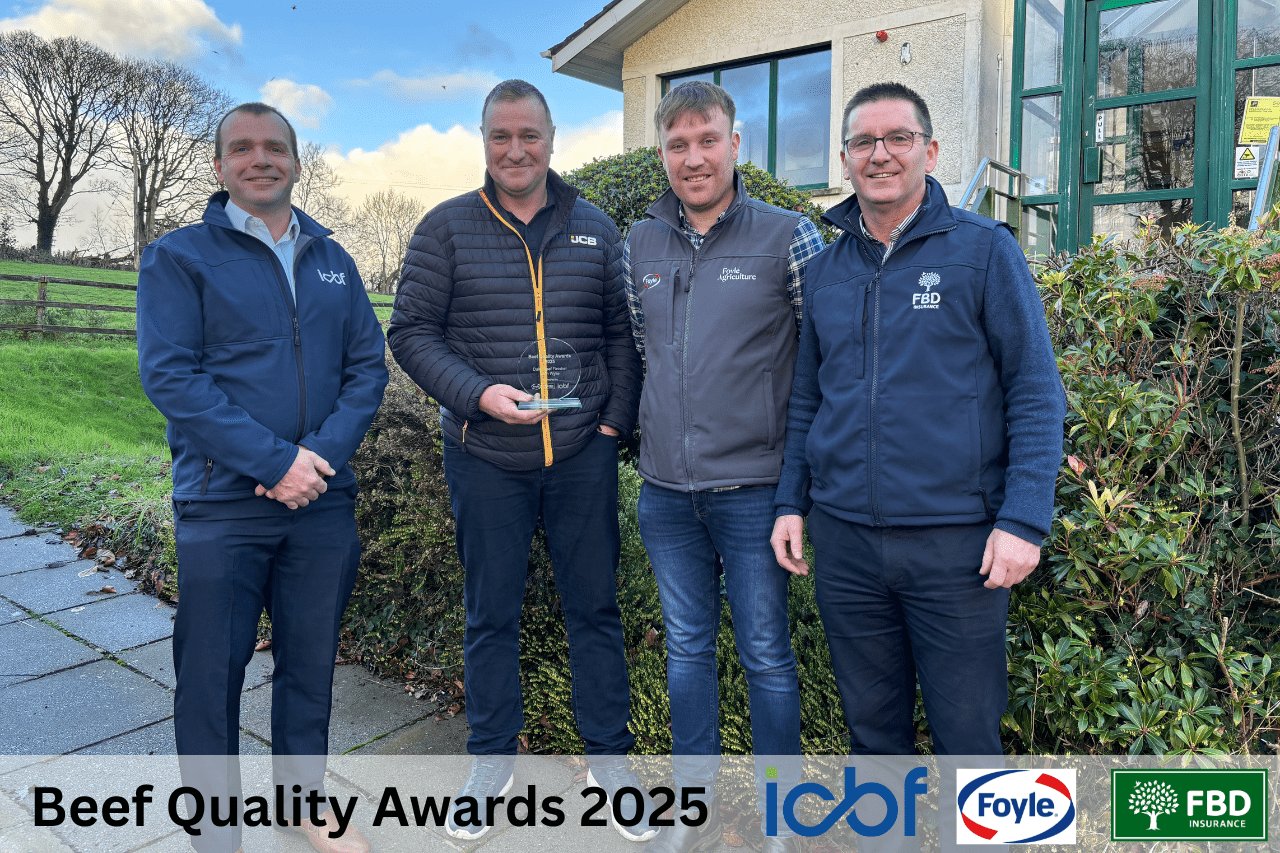
In recognition of his finishing performance, Alan was named Dairy‑Beef Finisher Award winner for Foyle Meats as part of the ICBF Beef Quality Awards.
Alan Wylie farms on the outskirts of Letterkenny, where he took over the family farm from his father with a clear aim — to build a strong, efficient dairy‑beef finishing system. Today, he rears and finishes approximately 150 cattle annually, drawing on years of experience and learning along the way to refine his day‑to‑day management decisions.
Like many farms across the country, family is at the heart of the operation. Alan farms alongside his wife and two children and also helps his brother with his own suckler enterprise, giving him hands‑on experience across both dairy‑beef and suckler systems.
Cattle Sourcing
Each year, Alan purchases 120–150 male weanlings or yearlings, typically weighing 280–350kg. The majority of cattle are sourced from his brother’s suckler herd, alongside local marts such as Stranorlar, Milford and Raphoe, as well as from a number of repeat sellers he has built long‑term relationships with.
Alan prefers to stick with the same marts year after year, explaining that he has “a good understanding of the type of cattle the farmers are selling and where they’re coming from.” While he generally targets cattle within his preferred weight range, he is willing to buy lighter animals if they are not over‑pushed and show good potential.
A strong believer in compensatory growth, Alan finds that these cattle can perform exceptionally well once turned out to grass after their first winter, delivering strong average daily gains.
All cattle are vaccinated and dosed immediately on arrival. They receive a pneumonia vaccine and are treated for worms, lice and other parasites, ensuring a healthy start within the herd. Alan regularly rotates dosing products to reduce the risk of resistance and has found that oral dosing delivers the best results in his system.
In recent years, he has also introduced dung sampling ahead of the finishing period. This allows him to work closely with his vet to develop a targeted treatment plan, only treating animals where necessary.
Feeding and Finishing Strategy
Alan makes no secret of being a strong feeder. He firmly believes that pushing cattle on a high‑intake diet pays dividends through heavier carcass weights, better conformation and improved profitability.
Following purchase, bulls are offered 0.5–1kg of meal per day, along with high‑quality silage, to ensure they settle quickly and thrive. Animals are then turned out to grass in spring as early as weather and ground conditions allow, giving them the best possible start to the grazing season.
The finishing system varies depending on whether cattle are destined for bull beef or steer beef:
- Angus‑sired animals are kept as steers to qualify for the Angus bonus, which requires castration. These cattle are typically slaughtered at 22–24 months.
- Continental‑type animals are generally finished as bulls and slaughtered at around 16 months.
While most cattle are finished indoors, animals deemed fit for slaughter off grass are drafted accordingly.
Once housed for finishing, cattle are built up gradually on 4–5kg of meal per day over a five‑ to six‑week period. Rations are then increased to:
- 10–12kg/day for continental bulls
- 7–8kg/day for Angus steers during the final four to six weeks
The finishing period typically lasts around 100 days, with approximately 1 tonne of meal fed per animal.
Using the Commercial Beef Value (CBV)
Until recently, Alan had not engaged heavily with the Commercial Beef Value (CBV). However, when reviewing his 2025 slaughter data, a clear trend emerged.
The top 20% of dairy‑beef animals by CBV were slaughtered at 23 months, achieving an average carcass weight of 418kg. In contrast, the bottom 20% were slaughtered at 24.2 months with an average carcass weight of 333kg.
Given that many of these animals were purchased for similar money, the performance gap was significant. As a result, CBV is now a tool Alan intends to closely monitor when sourcing dairy‑beef cattle, to improve efficiency and profitability going forward.
Views on the Beef Industry
Alan believes the beef sector is facing a period of uncertainty, reflecting wider global pressures. While factory prices were strong when selling cattle, the cost of replacing stock has risen sharply, forcing finishers to dig deeper into their pockets.
This exposes farmers to significant risk, particularly with beef price volatility. With factory quotes easing week‑on‑week, Alan is conscious that margins could quickly come under pressure if prices fall back to where they were 18 months ago.
When all costs are accounted for, Alan estimates that per‑head profit margins are not significantly different to those achieved three to four years ago. While output prices have increased, so too have replacement stock prices and input costs such as feed, fertiliser and animal health products.